Qualified call tracking
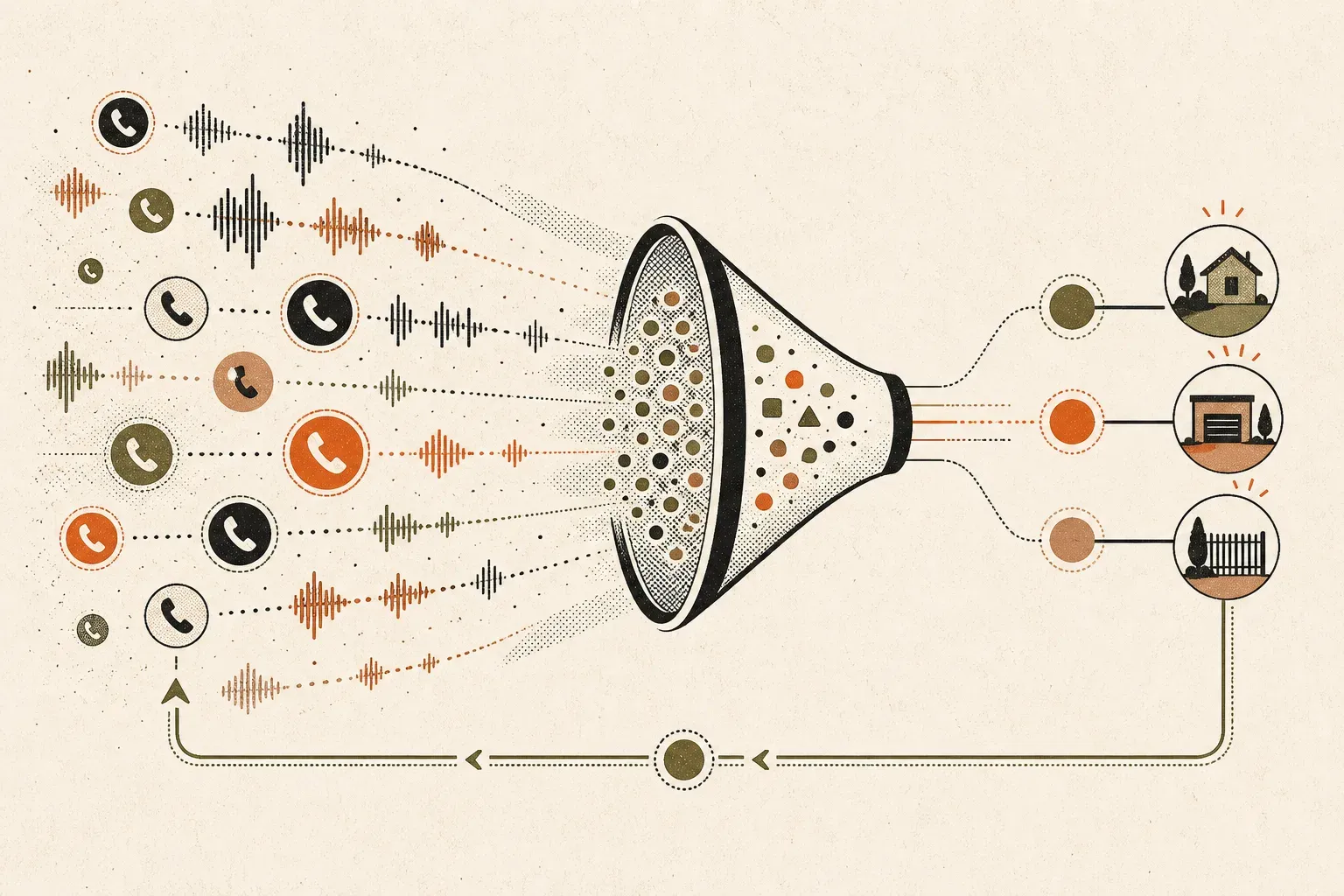
Calls from the search results page, captured, scored, and fed back to Google.
The gap
In many trades and local-services accounts, calls made directly from an ad are a major lead source. The current Google Ads setup is a responsive search ad with a call asset. The caller can connect without visiting the website, so website-only tracking never sees the enquiry.
Google removed the option to create new call ads in February 2026. Existing legacy call ads may continue to serve only until February 2027, so current builds and migrations use responsive search ads with call assets.
Google does count these calls. It counts any call over a chosen length, often thirty seconds, as a conversion. So a customer booking a £300 job and an existing customer chasing an update both register as one conversion, and the bidding buys more of both.
What we build
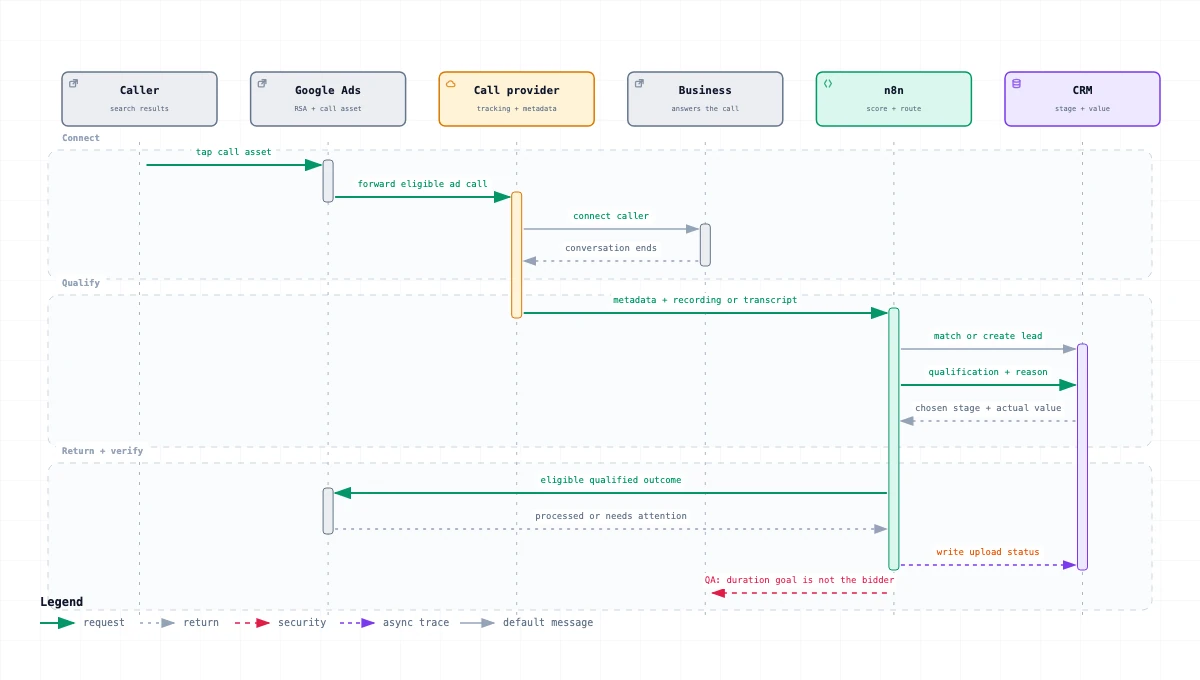
Google's Call Details Forwarding can pass a click ID for eligible calls to call assets that last more than fifteen seconds. Supported call-tracking providers can receive it in the call's SIP headers along with campaign and ad-group details. That creates a route for an ad call to be matched to a later CRM outcome.
Every call is then scored. Depending on volume that is a rules layer (duration, repeat caller, keyword spotting, office hours) or an LLM listening to the transcript and answering one question: was this a lead? The score and the GCLID go to n8n, which matches the call to the CRM record when one exists and returns only qualified calls to Google Ads as offline conversions, with a value.
For the Google Business Profile, CallRail can swap the listing's primary number for a tracking number while keeping the real number as secondary for citation consistency. Those calls carry no GCLID, so they stay reporting-only, but you finally know how many of them there are and what they were.
There are a few implementation details that catch people out. Account-level call reporting has to be on, the provider must support Call Details Forwarding, and the whole route needs a live test. Google's duration-based call conversion can stay for reporting, but it should not compete as a primary bidding goal with the qualified offline outcome. We configure and test those choices rather than assuming the integrations deduplicate themselves.
What you get
Tracking numbers on responsive search ad call assets and, where appropriate, the Business Profile. Scoring rules or transcript scoring. The n8n workflow that joins calls to the CRM and returns eligible qualified outcomes. A monthly report of calls by source, score and outcome.
Before changing the setup, the free Phone Lead Blind-Spot Calculator can compare the calls Google counts with the calls that qualified, became jobs and produced contribution in one matched period.
Partners
CallRail. UK numbers need an identity verification step on signup, so allow time for it.
One more reason this matters here: Google's own AI-qualified call conversions depend on call recording that is currently available only when both numbers are in the United States or Canada. In the UK and Ireland the fallback is call duration. The quality layer has to be built, which is what this service is.
Sources checked
- Google Ads: transition from call ads to responsive search ads
- Google Ads: Call Details Forwarding
- Google Ads: about call reporting
- Google Ads: AI-qualified calls availability
Related: Why calls from the search results page can miss the CRM · CRM feedback loop
FAQ
Does call tracking hurt local SEO?
Not when done properly. The real number stays on the listing as the secondary number, so name, address and phone data remain consistent across citations.
What counts as a qualified call?
Whatever you say it is. Usually a new enquiry from a potential customer with a real job. The scoring rule is written with you and changed when you change your mind.
Can you do this without CallRail?
Yes, where the provider supports the required Google integration and click-ID handoff. We test that route before choosing the call-tracking provider.