Lead generation Google Ads management
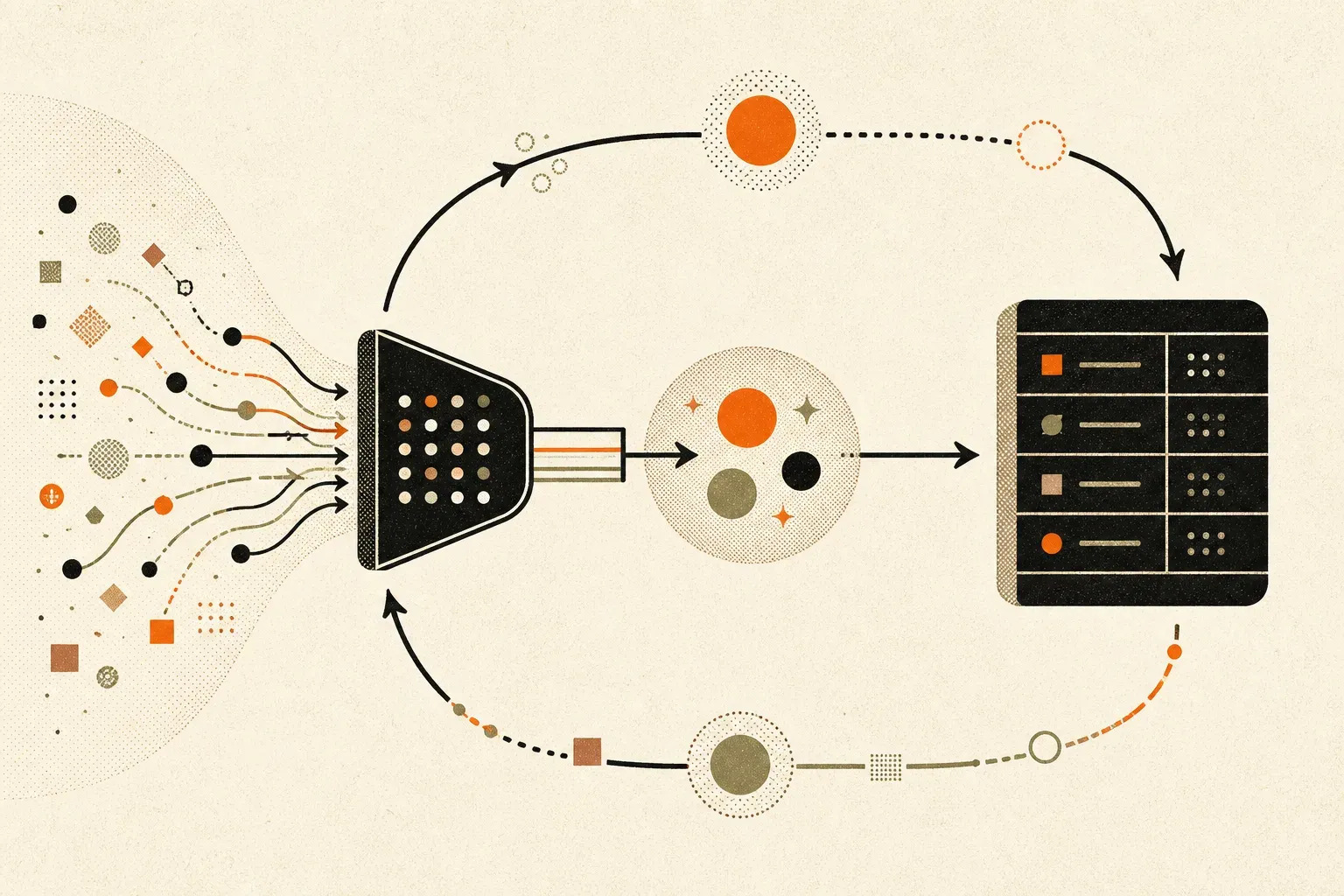
Google already has the strongest bidding machine in the auction. The problem is usually the instruction it receives.
The Qualified Lead Loop is my ongoing lead generation Google Ads management product. I manage the account and the commercial data that tells it what a good outcome looks like as one job. The result is not a more elaborate dashboard. It is a better instruction to the bidder, checked against CRM outcomes every week.
Management is designed for call-heavy lead generation businesses spending about £5,000 a month or more on Google Ads. Smaller or uncertain accounts can start with the fixed-fee diagnostic. Online retailers have a separate ecommerce Google Ads management product.
The Qualified Lead Loop
- Capture. Map every route into the business and preserve eligible identifiers and consent state. Forms, calls from ads, website calls, WhatsApp and chat each need a documented route or a documented gap.
- Qualify. Compare the enquiry with call scoring, CRM stages and the commercial rules agreed with you. A long call is not automatically a good lead.
- Value. Derive values from close rate, completion rate, contribution or actual revenue. A form and a qualified call should not be presented as equal if the business evidence says they are not.
- Return. Send eligible outcomes to Google through the supported route, without counting the same outcome twice at full value.
- Verify. Reconcile uploads, conversion actions, budgets and outcomes every week. The system flags movement. I inspect it and decide what changes.
The loop does not make every lead attributable. Consent, missing identifiers and unsupported call routes create real gaps. Those gaps are reported rather than filled with invented matches.
This management product is deliberately for lead generation
The reference record is what happened after the enquiry: qualified, quoted, booked, completed and paid. Calls need a quality layer beyond duration, and the sales cycle determines how quickly later outcomes can be used.
That is different from ecommerce, where the reference record begins with a Merchant Center catalogue, transactions, order lines, refunds, customer status and product margin. Keeping the two management products separate makes the promise, inputs and weekly checks legible. See ecommerce Google Ads management for that system.
What ongoing management includes
- Google Ads structure, budgets, ads and search terms at the level the account needs.
- Conversion-goal and value maintenance.
- Weekly checks of spend, signal volume, outcome mix, upload health and material movement.
- Staged changes, with the account checked in the interface before a change stands.
- A readable change log and the business reason for material decisions.
- Quarterly re-derivation of lead or conversion values, or more often where the volume supports it.
Call-tracking deployment, CRM integration, measurement reconstruction, a data warehouse, landing pages and third-party services are scoped after I map the existing system. The proposal states what is included in management, what is setup work and what carries an external running cost.
The first 90 days
Urgent faults are dealt with when they are found. Beyond that, I avoid changing the account structure, the bidding signal and the landing path at the same time. A result is not useful if nobody can tell which change produced it.
Days 1 to 30: establish the truth
I confirm access and ownership, inventory every conversion action and lead route, and reconcile the platform totals with the CRM or maintained operational system. The baseline records spend, qualified outcomes, revenue or contribution, conversion lag and known attribution gaps. It includes forms, calls, CRM stages and the identifiers available at each handoff.
Days 31 to 60: repair and test the signal
I derive the value schema, separate primary bidding goals from reporting-only actions, and test each agreed capture and upload route. Where separately scoped work is needed, this is when call tracking, CRM workflows, warehouse loads or landing-page changes are built and checked.
No new bidding instruction is trusted because a tag fired once. The QA record has to show the right outcome, value, timestamp and identifier reaching the right place without duplication.
Days 61 to 90: stage the account changes
Once the inputs are credible, I stage the bidding and structural changes and observe them over at least one or two conversion cycles. The weekly reconciliation becomes the steady operating loop.
A long sales cycle or delayed access can move this sequence. The three-month initial term exists because setup and observation cannot be compressed into a few interface changes.
What I need from you
- Access to the advertising, analytics and operational systems in scope.
- Someone who can explain the lead stages, values and exceptions.
- A maintained record of lead outcomes.
- Timely approval where a change affects the website, CRM, call route or customer data.
- A commercial constraint I can work from: the available budget, the contribution requirement, or both.
You do not need to arrive with perfect data. You do need to be willing to expose the gaps and maintain the fields the system depends on.
Who this is not for
This is not a fit if nobody records what happens after an enquiry, the account has too little volume to evaluate a change, or the business will not share enough commercial information to derive a useful value.
It is also not a fit if you want guaranteed short-term performance, unattended software changing the account, or constant interface activity as proof of work.
A smaller account may need the free signal scan, a fixed-fee diagnostic or a contained tracking repair instead of ongoing management. I will say so before proposing a retainer.
Evidence you can inspect
A travel lead-generation business introduced lead scoring before upload and returned only qualified outcomes as offline conversions. Cost per qualified lead moved from about €50 to €20-30 over the comparison period. The lead definition stayed constant and the feedback gate changed, but this was not a controlled incrementality test.
Anonymised conversion-value calculations, QA records, upload logs and client references are available on request. They show whether the system was implemented. They do not guarantee that another account will produce the same result.
Matching an outcome to an ad click is attribution hygiene. It is not proof that the ad caused the sale. Holdout or geo tests answer that question where the volume justifies them.
Ownership and exit
Your Google Ads, GA4, Google Tag Manager, CRM and Google Cloud properties remain yours. Accounts and properties created for the work are created in your name wherever the platform allows it.
Deliverables pass to you when they are paid for. Fire Pixel retains its pre-existing tools, templates, methods and general know-how. The practical boundary is documented in the proposal and the terms.
If the engagement ends, I remove my access and hand over the current runbook, value definitions and implementation records. Client-owned warehouse pipelines and account configurations remain in place, subject to the external subscriptions and maintenance they require.
Pricing
Management starts at £1,000 a month or 10 per cent of media spend, whichever is higher. Setup is scoped separately. The initial term is three months, followed by rolling monthly management.
FAQ
What does the management fee include?
It covers ongoing Google Ads management, the weekly review, conversion-goal and value maintenance, and the decisions that reach the account. Initial measurement reconstruction, call tracking, CRM integration, warehouse work and landing pages are scoped separately where they are needed.
How quickly does the Qualified Lead Loop start working?
There is no honest fixed answer. Access, existing data quality and the business's sales cycle determine the pace. The first 90 days establish the baseline, repair and test the signal route, then stage account changes over at least one or two conversion cycles.
Do I need a CRM?
Lead-generation management needs a reliable record of what happened after the enquiry. That can be a CRM or a maintained operational system. The brand matters less than whether someone records outcomes consistently.
Does AI make changes to the account?
No. The system scores, reconciles, proposes and flags. I decide what changes. Google's bidder remains the autonomous decision-maker inside the auction, where it has signals no external system can see.
Do you manage ecommerce accounts too?
Yes, through a separate ecommerce management product. Ecommerce uses Merchant Center feeds, transactions, order lines, customer status and product margin rather than the lead stages, call quality and CRM outcomes described on this page.