Your CRM only sends form leads back to Google
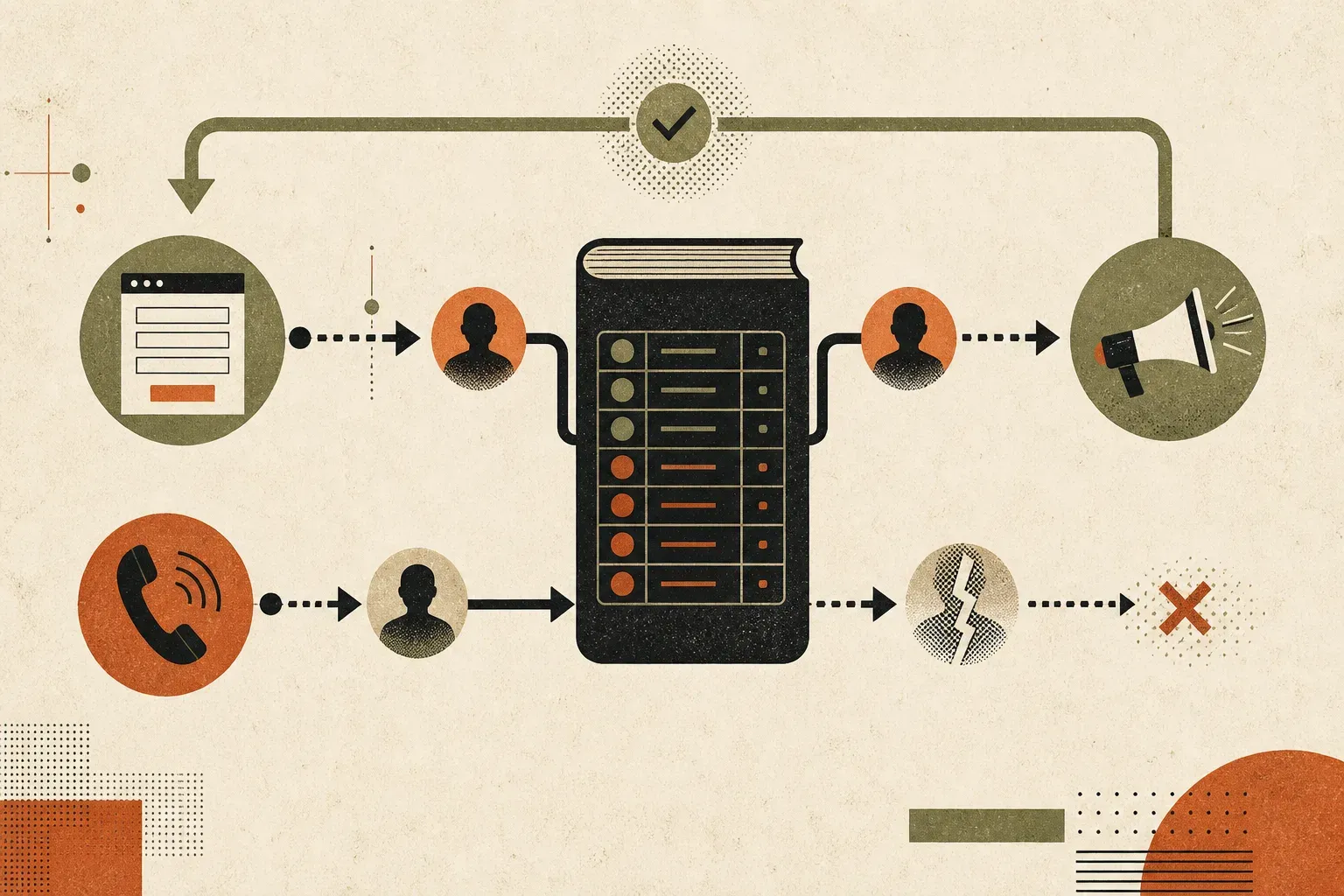
A lot of well-run accounts have an offline conversion upload. Completed, paid jobs go from the CRM back to Google Ads, matched on the click ID that was captured when the lead came in. It is the right idea and it is better than most accounts manage.
Ask one question: how does a phone lead get a click ID into the CRM?
Often it does not. The receptionist takes the call, types the name and number into the CRM, and there is no click ID because there was no form. When the job completes, a click-ID-only upload finds no identifier and skips it. Any phone-originated customer without another eligible matching route is invisible to that upload.
What Google learns from that
Forms produce customers. Calls produce nothing. So bid on whatever produces forms.
Where calls and forms close at materially different rates, that can teach the machine from the wrong mix of outcomes. In one account we reviewed, the owner's CRM-to-Zapier upload had never sent a phone job back because those records lacked a click ID. That is an account example, not a platform-wide close-rate claim.
The fix
Use two matching routes for two different gaps.
Enhanced conversions for leads can match an eligible offline outcome using hashed first-party data when the corresponding lead data was captured through the website tag with the required consent. It can supplement a click ID, but it is not a general phone-number lookup and does not guarantee that a caller who never visited the site will match.
For calls made directly from a responsive search ad, supported call tracking and Call Details Forwarding can preserve the click ID on an eligible call. Calls from the search results covers that route.
And a loop rather than a one-way upload. Google to call tracking to the automation to the CRM and back to Google. Stage changes trigger the upload. New customers join the exclusion audience so their update calls stop counting. The CRM stays current because the automation does the boring part.
The second leak
Existing customers ring the number in the ad. That call counts as a conversion. The account is paying to be phoned by people it already has. A Customer Match exclusion, refreshed from the CRM on a schedule, reduces it substantially wherever the account and customer records are eligible for matching.